On this page
A score is only as good as your ability to trust it. If a number appears at the end of an interview and nobody can say where it came from, it deserves to be doubted. So here is how we build one, in plain language, and what it does and does not measure.
We score what you show, not how you sound
The thing we care about is the substance of your answers, the evidence that you can do the work. Not your accent, not how fast you speak, not how polished you sound. Two people can describe the same strong experience in very different styles and still land in the same place with us, because we are reading the content of what you said, not the delivery.
Every answer is measured against the role
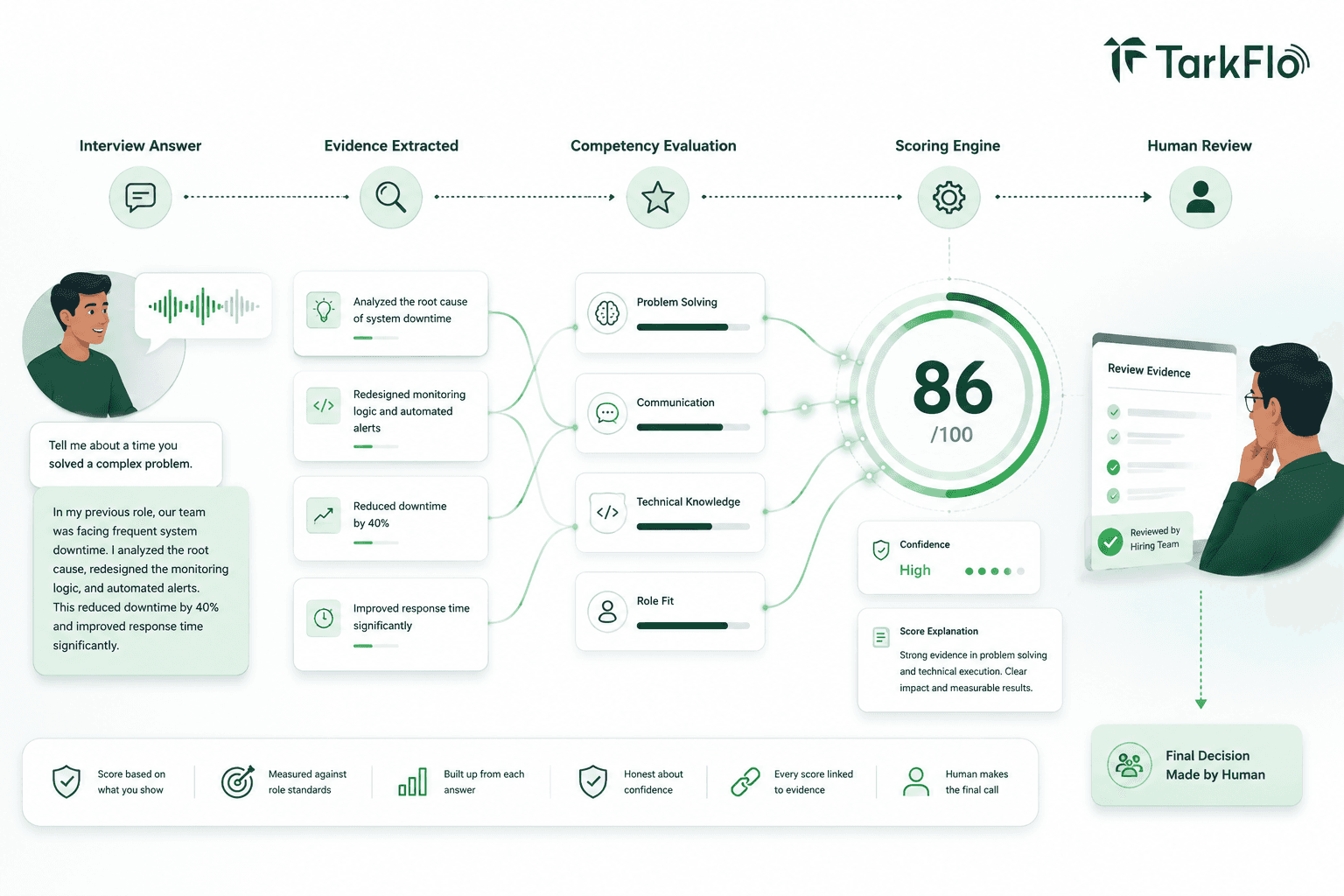
Before an interview begins, we set out what a strong answer looks like for that specific role. Each of your answers is then measured against that standard, so you are judged on what the job actually needs rather than a vague overall impression. Everyone interviewing for the same role is held to the same standard, which is what makes the results comparable.
The score is built up, not guessed
We do not glance at a conversation and hand out a gut-feeling number. Each answer earns its own rating, and the overall score is those ratings brought together the same way every time. Because it is built from the parts, you can always see which answers lifted the score and which held it back.
We are honest about how much we know
A short interview tells us less than a long one, and we say so. When there was not enough in the conversation to judge something fairly, we mark it as needing more rather than inventing a confident number. Every score arrives with a sense of how sure we are, so nobody reads too much into a thin sample.
Every score points back to something you said
A number on its own is not worth much. Each rating links back to the moment in the conversation that produced it, so a candidate can see why they were rated the way they were, and a hiring team can see exactly what a score is standing on. Nothing comes out of a sealed box.

A person still makes the call
When a company is hiring, the score is there to help a person decide, not to decide for them. It never rejects anyone on its own. It sorts and surfaces the evidence, and a real person makes the final judgment with that evidence in front of them.
We keep checking ourselves
Scoring is only useful if it stays consistent, so we test it against answers we already understand and watch how it behaves over time. If it drifts, we catch it and correct it. The aim is a score that means the same thing this month that it meant last month.
The point of all of this is simple. A score should be something you can question and something we can explain. If you cannot see where a number came from, you should not trust it, and neither would we.