On this page
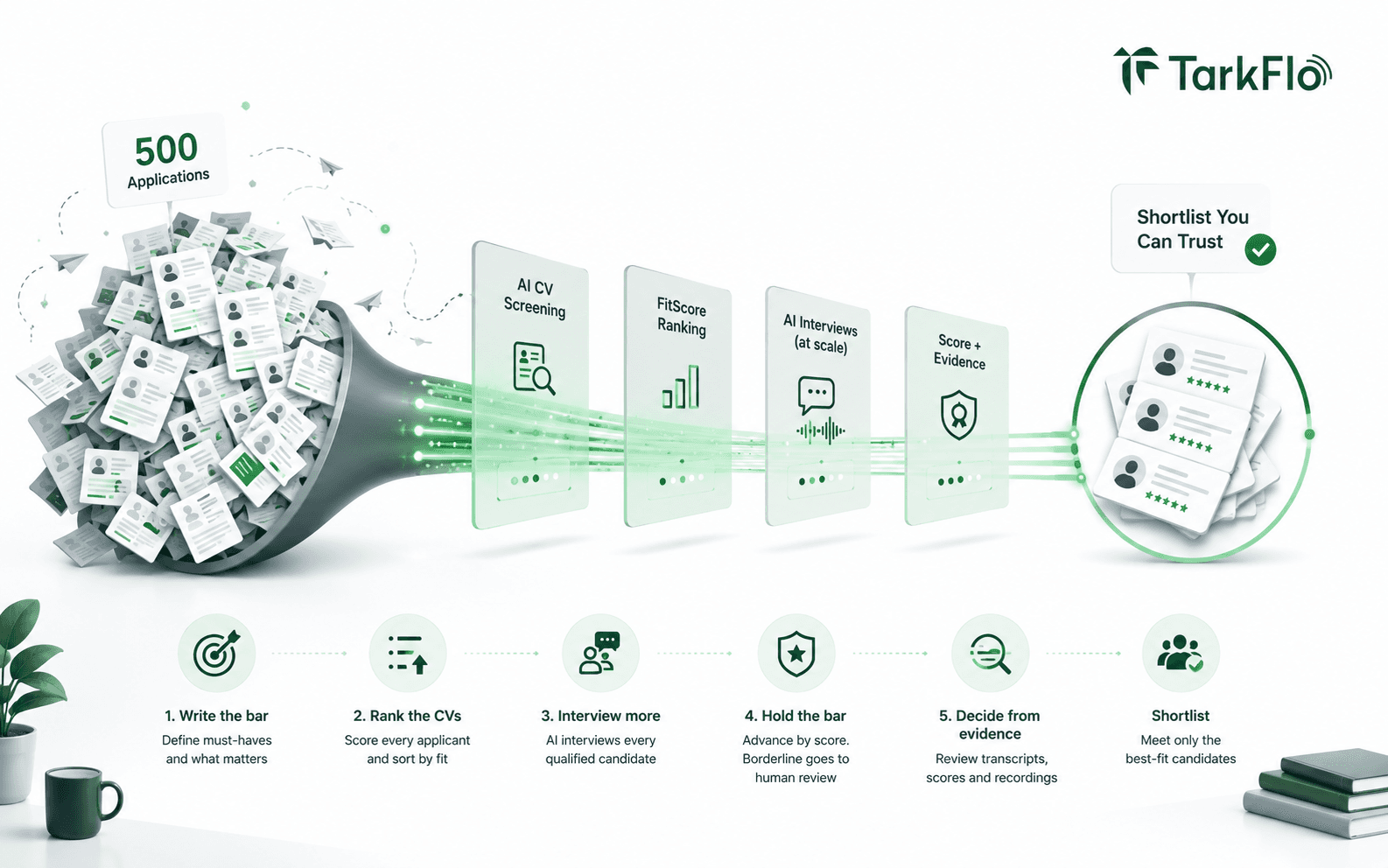
Post one decent role in a metro and 500 applications is a normal outcome, not an outlier. At two minutes per CV, reading the pile is 16 hours of work before a single conversation happens. Nobody actually does that, which is why the real process at most small companies is: read until tired, call a few people who look plausible, and hope the right person was near the top of the inbox. Here is a better process. It works whether you automate it or not, though the later steps are where software earns its keep.
Step 1: write the bar before you open the pile
Decide, in writing, what disqualifies a candidate and what ranks them. Disqualifiers are binary: missing work authorization, a hard skill the role cannot function without, location if it truly matters. Ranking criteria are the three or four things that predict success: relevant recent experience, evidence of shipped work, communication. Doing this first keeps you from inventing standards as you read, which is where inconsistency and bias creep in.
Step 2: rank the CVs, do not read them in order
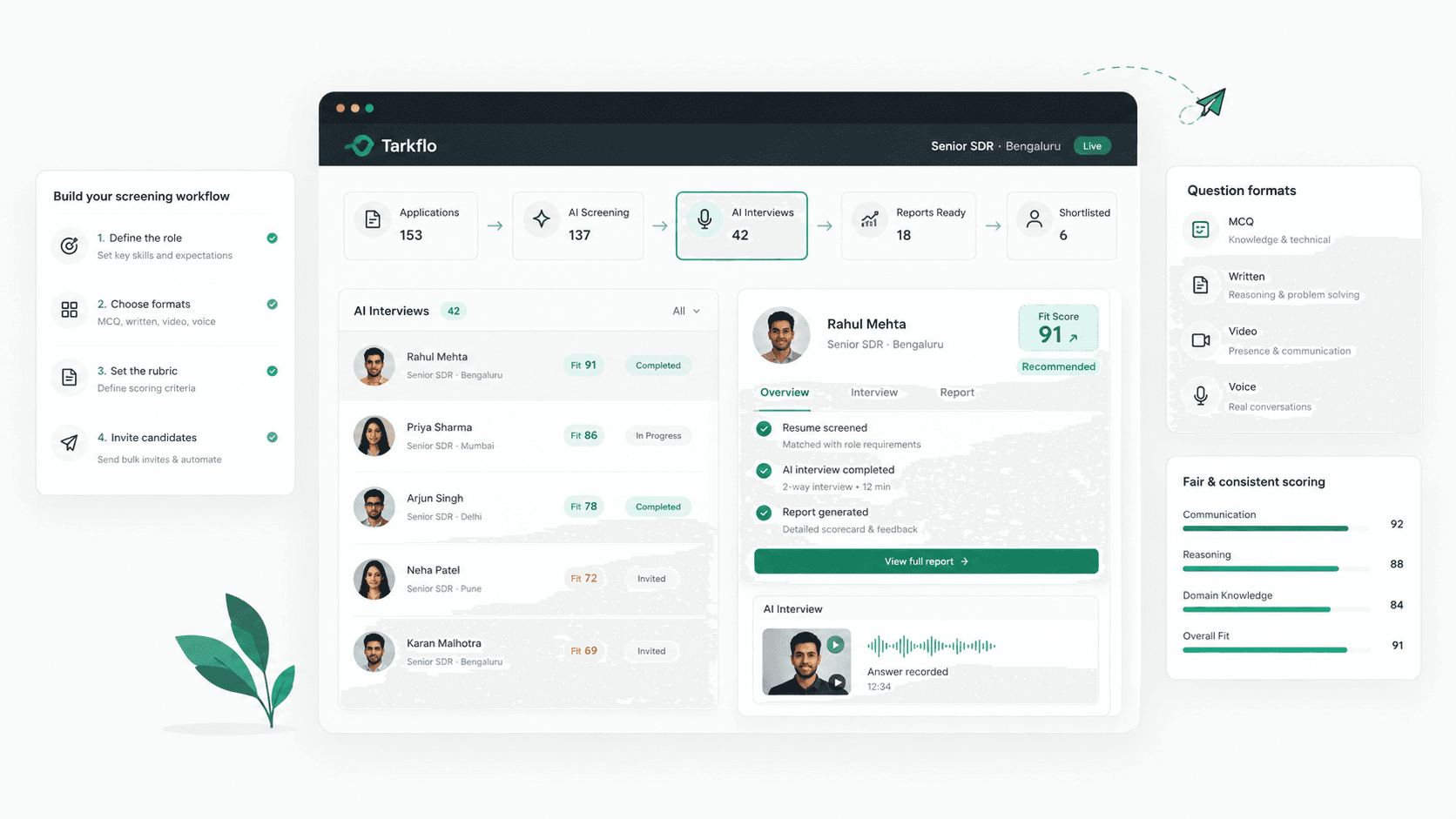
Reading applications in arrival order means your attention is freshest for whoever applied first, which is not a hiring signal. Score every CV against your written bar, then read from the top of the ranking. This is exactly the job AI CV screening does well: it reads all 500 against the role, weights recent experience over stale keywords, and hands you an ordered list. Tarkflo Hire runs this as FitScore, with identity details redacted from the scoring so polish and names do not outrank fit.
Step 3: interview more people, not fewer
The instinct under volume is to cut hard at the CV stage and interview five people. But CVs are weak evidence, and the cost of that cut is invisible: the strong candidate with a mediocre CV never gets heard. The volume-proof alternative is to make the first interview cheap. A live two-way AI voice interview runs on every qualified applicant, at any hour, with no scheduling. Instead of five conversations you get fifty, and the ranking that comes out is based on what people actually said.
Step 4: hold a bar, not a quota
Decide the score a candidate must clear to advance, and let passing candidates move forward automatically. Two rules keep this fair: borderline candidates wait for a human decision, and nobody is rejected by the machine alone. The bar does the sorting; you do the judging.
Step 5: decide from evidence
When you open the shortlist, every name should carry its evidence: the interview transcript, the scorecard, the recording. Read the transcript of your top three before you book final rounds. It takes ten minutes and replaces the screening calls that used to take a week.
The one-afternoon setup
- Write the disqualifiers and the three ranking criteria for the role
- Set up CV screening so every application is scored on arrival
- Configure the AI interview questions from the job description
- Set the advance threshold and let the pipeline run
- Block 30 minutes at the end of the week to review the ranked shortlist
None of this requires a recruiting team. It requires a written bar, a pipeline that runs it consistently, and the discipline to judge from transcripts instead of vibes. If you want to try the automated version on a real role, Tarkflo Hire includes a free plan with live AI interviews and AI screening, and the pricing is public.
Start free
Start freeHow the platform runs each round
How the platform runs each round