
The round that used to be a phone call now runs itself
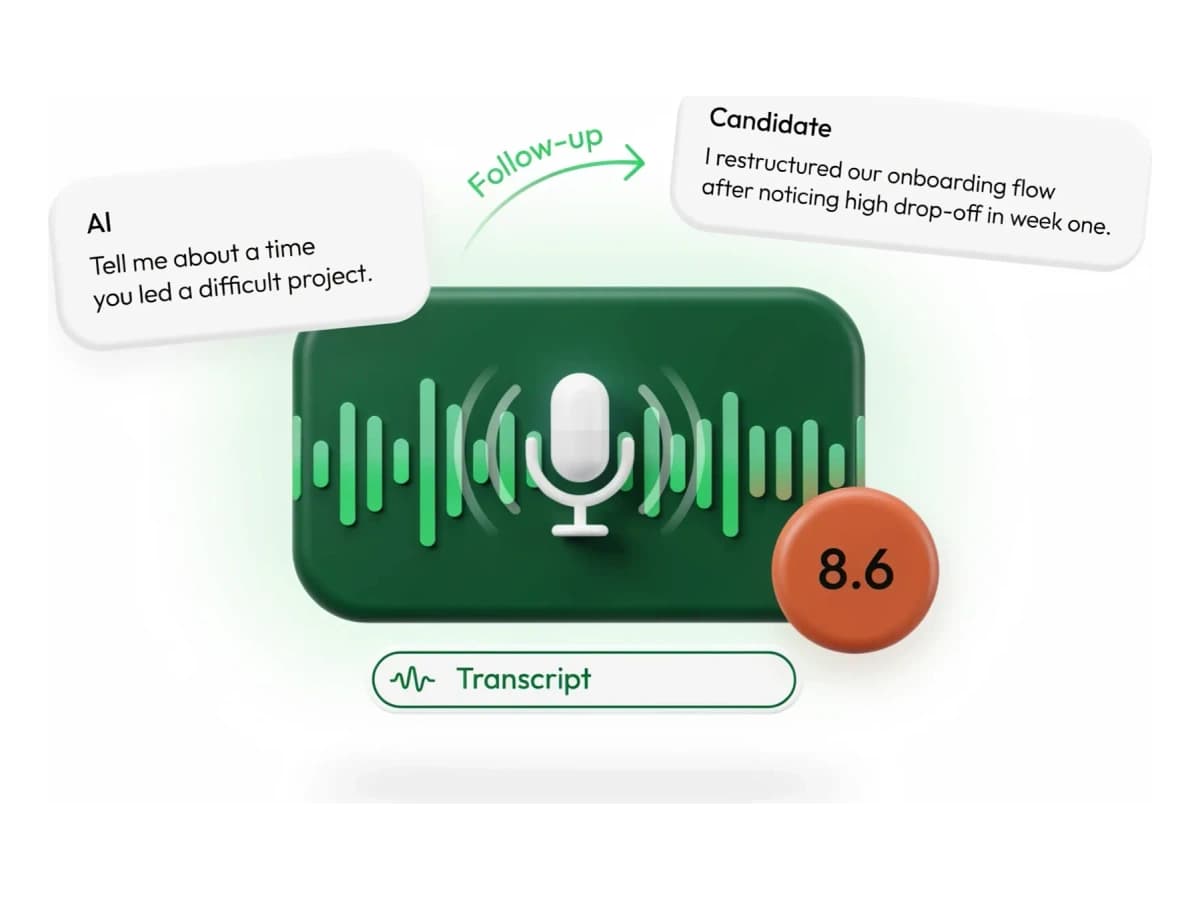
Screening collects answers; this round holds a two-way conversation. Tarkflo speaks, hears the answer, and asks the next question based on what the candidate just said. It probes where answers are thin, scores the conversation in real time, and drops the result into the pipeline, so recruiters never have to dial.
- Two-way
- Real conversation
- Browser
- No install
- Scored
- As it happens
Follow-ups based on the candidate answer.
Candidates join from a magic link.
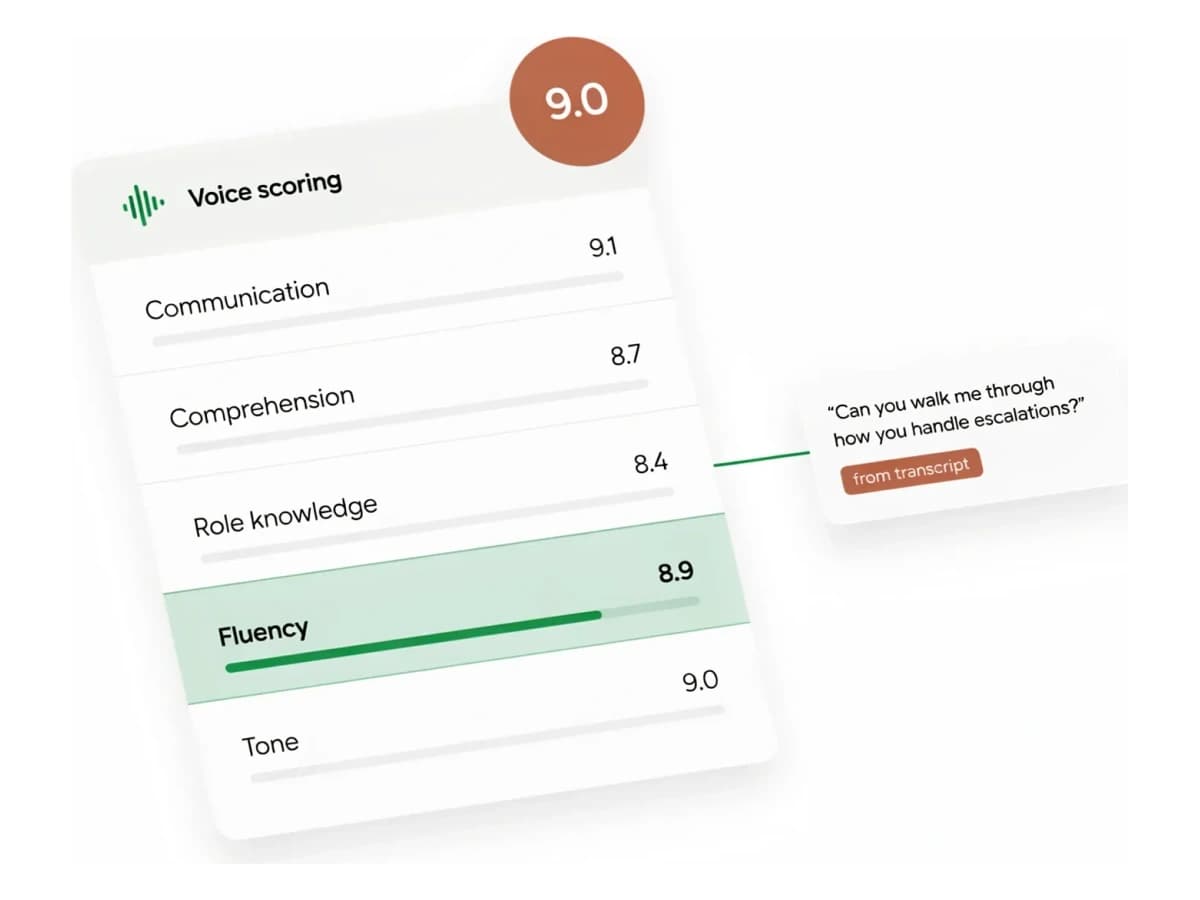
Fluency, comprehension, role knowledge.
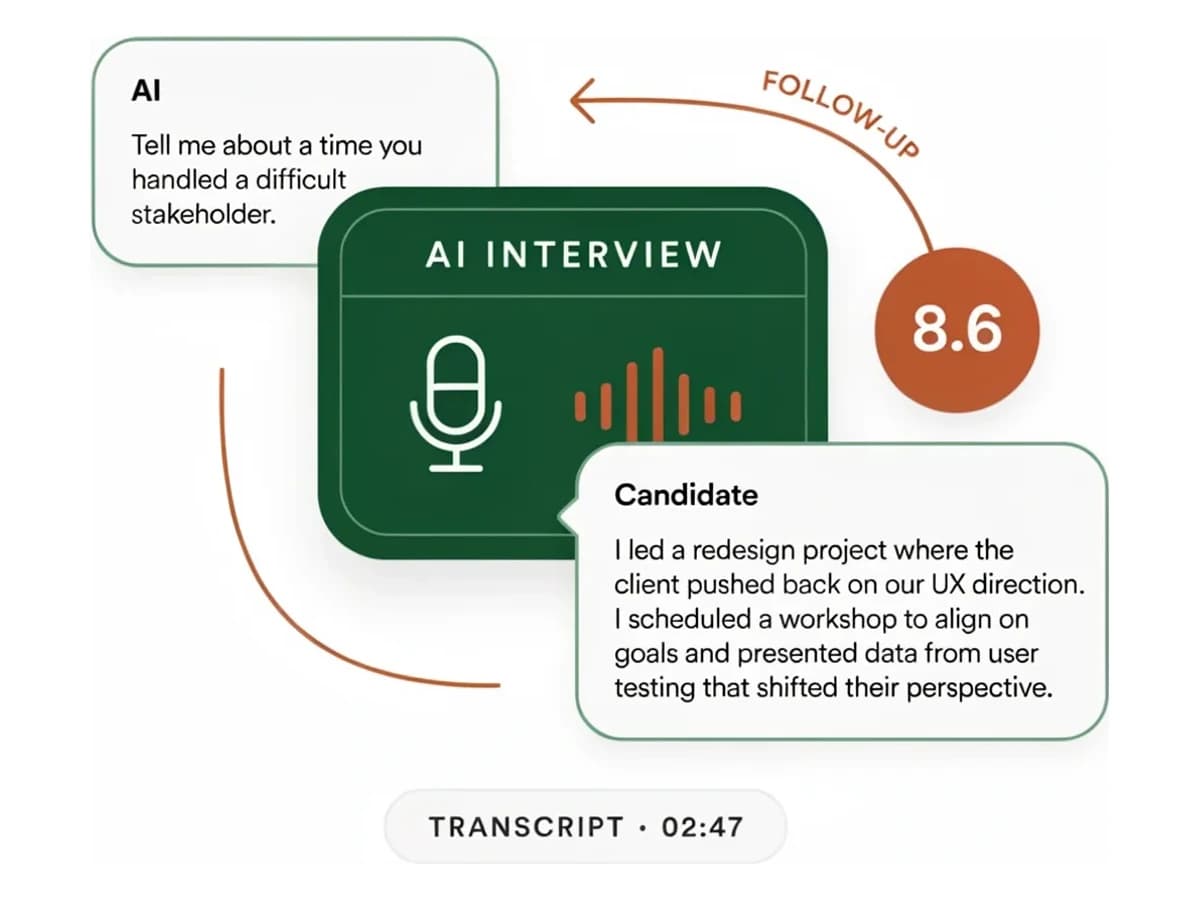
Follow-ups, not a fixed script
When a candidate gives a strong answer, Tarkflo goes deeper. When an answer is vague, it asks the candidate to be specific. The interview adapts the way a good recruiter would, so the transcript shows how someone actually thinks.
- Dynamic follow-up questions per answer
- Probes vague or incomplete responses
- Natural, low-latency voice in the browser
Scored on the things a call is for
Tarkflo evaluates how clearly a candidate communicates, how well they understand the question, and whether they know the role. For voice processes it also rates fluency and tone. Every rating comes with the transcript line behind it.
- Communication, comprehension, and role knowledge
- Fluency and tone for voice-process roles
- Transcript evidence attached to every rating
Set it up once, then it runs around the clock.
- 01
Define the focus
Pick the dimensions and topics the interview should cover for the role.
- 02
Candidate joins
A magic link opens the interview in the browser, on any device.
- 03
Tarkflo interviews
It asks, listens, follows up, and adapts to each answer in real time.
- 04
Scored and advanced
A scorecard with full transcript lands in the pipeline, and passing candidates move to the next round.
A real interview round, without a recruiter on the call
Runs 24/7
Candidates interview when it suits them, across time zones.
Same standard
Every candidate gets the same fair, structured conversation.
Multilingual
Interview in the languages your roles are hired in.
No scheduling
No calendars, no no-shows, no recruiter hours spent dialing.
Full transcript
Read or skim exactly what was said, with scores inline.
Feeds one pipeline
The score lands in the same ranked pipeline as every other round.
Common questions
What is a two-way AI interview?
A two-way (2-way) AI interview is a live, real-time conversation: Tarkflo asks a question, listens to the actual answer, and decides the next question based on what the candidate said, the way a human interviewer would. That is different from a one-way video interview, where a candidate just records answers to fixed prompts with no back-and-forth.
Does it sound robotic?
No. The voice is natural and the latency is low enough to feel like a real conversation. Candidates speak normally and Tarkflo responds in turn.
What languages are supported?
Tarkflo runs voice interviews in the major languages used for high-volume hiring. Tell us the languages your roles require and we will confirm coverage on the demo.
Can a human review the interview?
Always. Every interview produces a full transcript and recording attached to the scorecard, so your team can review any candidate before deciding.
How is this different from one-way video?
Tarkflo offers both, at different stages. One-way video is a screening format: candidates record answers to your prompts, which are transcribed and graded to your rubric. The live voice interview is the round after it: a two-way conversation that asks follow-ups and adapts to each answer. Screening filters the pile; this round interviews the qualified.