Most hiring bias does not arrive as a strong opinion. It arrives as a series of small, unexamined judgments made under time pressure, with no record of why one candidate moved forward and another did not. The first round, where volume is highest and attention is thinnest, is where this happens most.
Why structure helps
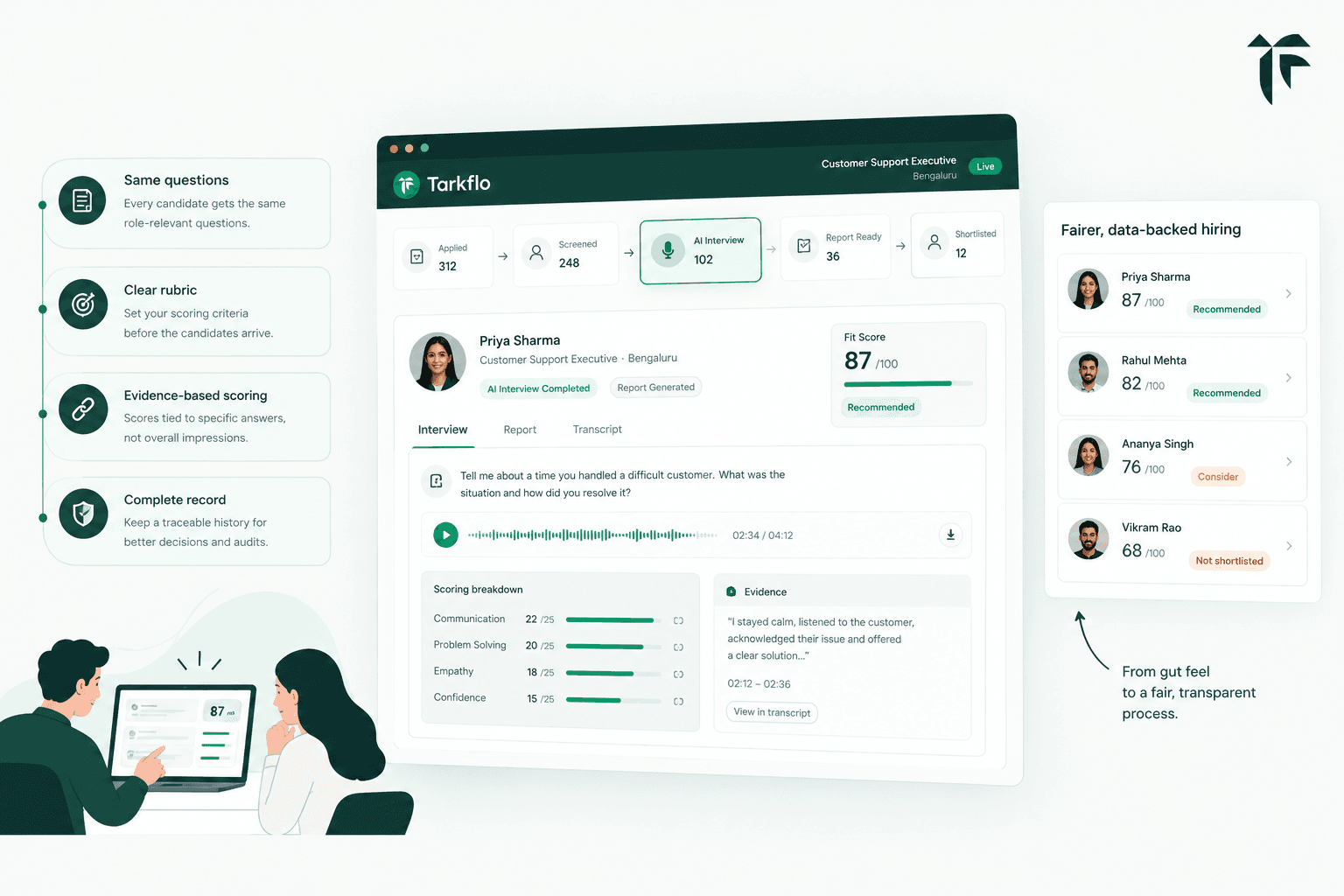
Structured screening asks every candidate the same role-relevant questions and scores them against the same rubric. That single change removes most of the room where inconsistency creeps in. It does not make hiring perfect, but it makes it comparable, and comparable is the precondition for fair.
- The same questions for everyone applying to a role
- A rubric written before the candidates arrive
- Scores tied to specific answers, not overall impressions
- A complete record you can review if a decision is challenged
Evidence over impression
A score is only fair if you can say where it came from. Every rating should link back to the answer or transcript line that produced it, so a hiring manager can see why one candidate ranked above another instead of trusting a number from a black box.

Defensible by design
Role-relevant questions, uniform scoring, and a retained record are also what an audit looks for. Designing the first round this way is good for candidates and good for the team that has to explain its decisions a year later.