For a voice process, the first interview is not a proxy for the job. It is the job, in miniature. The candidate has to listen, understand, and respond clearly under a little pressure, which is exactly what the role demands every day. That makes the screening simpler than people expect, as long as you measure the right things.
Measure these
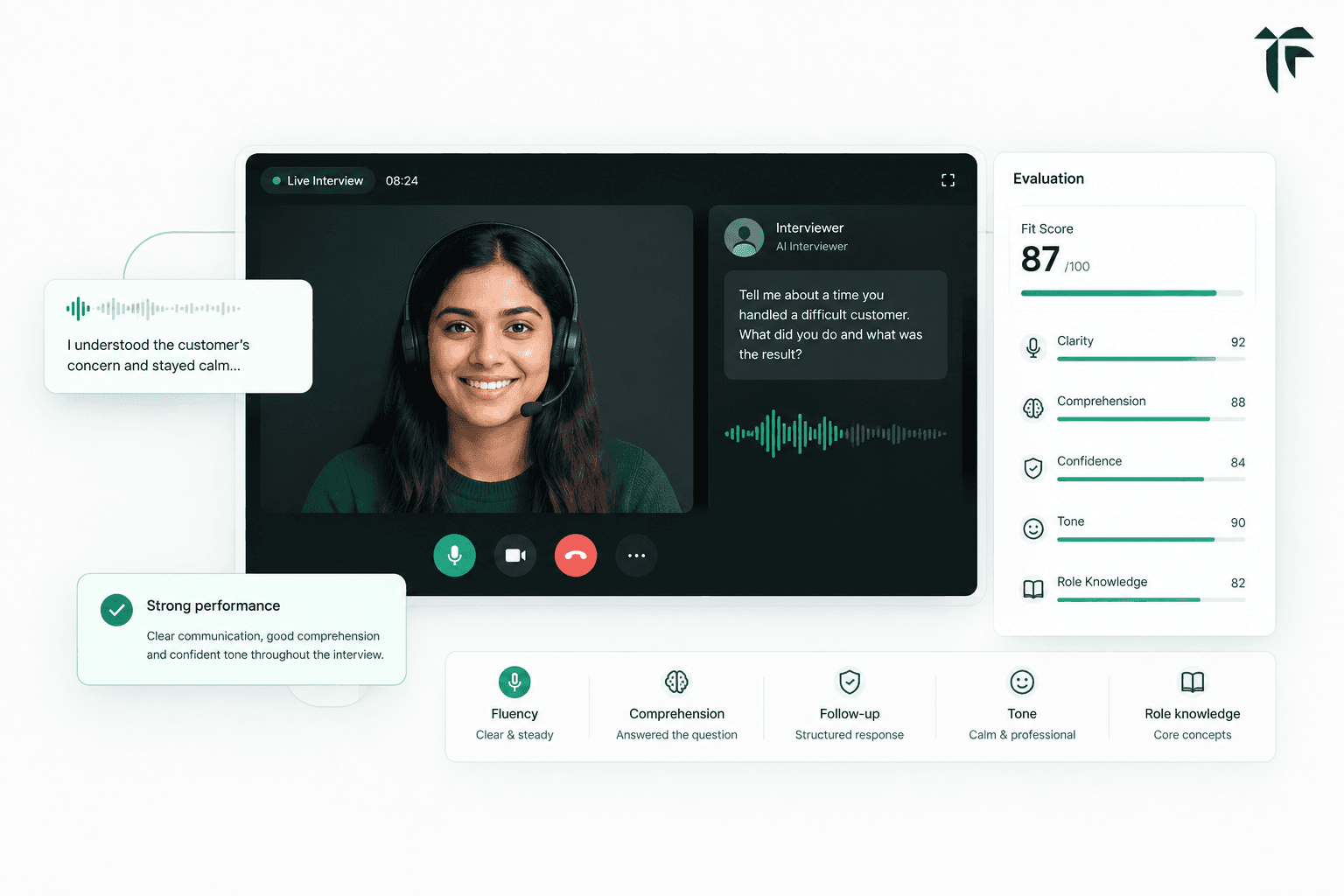
- Fluency: can the candidate speak clearly and at a steady pace in the working language
- Comprehension: do they answer the question that was actually asked
- Clarity under follow-up: does a second, harder question still get a structured answer
- Tone: do they stay calm and courteous when the prompt is awkward
- Role knowledge: only the basics the role truly needs on day one
Each of these shows up in a short spoken exchange. None of them needs a resume, a degree filter, or a typing test that has nothing to do with the work.
Be careful with these
Accent is not fluency. A candidate can be perfectly clear and easy to understand without sounding like anyone in particular, and scoring accent instead of clarity quietly filters out good people. Score whether the message lands, not how closely it matches a reference voice.
Speed is not comprehension. A fast answer to the wrong question is worse than a measured answer to the right one. Make sure your rubric rewards understanding over reflex.
Keep it consistent
Whatever you choose to measure, every candidate for a role should be measured the same way, with the score traceable back to the moment in the conversation that earned it. Consistency is what makes the result fair, and what makes it defensible later.